

A full-home renovation is the most ambitious project most homeowners will ever undertake. For room-specific detail, see our dedicated guides on kitchen renovation, bathroom renovation, living room remodeling, and outdoor renovation in Austin. It is also, when done well, the most transformative — not just in what it does to the house, but in what it does to how you live in it. Everything changes: the way light moves through the space, the way rooms relate to each other, the way the home feels the moment you walk in the door.
It is also the project most likely to go wrong. Not because whole-home renovations are inherently unpredictable, but because they expose every assumption that went unexamined in the planning phase. This guide is about making sure yours doesn't.
"A whole-home renovation isn't a collection of room projects. It's one coordinated project. The difference in how you manage it determines almost everything about the outcome."
Whole-Home vs. Room-by-Room: The Real Difference
Homeowners often ask whether it's better to renovate the whole home at once or room by room over time. Both have merit — but they're fundamentally different approaches with different outcomes.
The core advantage of a whole-home approach is coordination. When you renovate a single room, you work around the existing plumbing, electrical, and HVAC. When you renovate the entire home, those systems become variables. You can upgrade the electrical panel once, run new circuits everywhere they're needed, and close the walls — rather than opening the same walls twice over two projects three years apart. The savings in redundant demo, patching, and trade mobilization are significant.
Room-by-room renovation makes sense when budget must be allocated incrementally, or when the home's systems are already updated and the scope is genuinely cosmetic. It does not make sense when the home needs mechanical work — because that work will disrupt every space regardless, and batching it in one project is always more efficient.
How to Phase a Full-Home Renovation
The sequence of work on a whole-home project is not arbitrary. Deviating from it creates expensive rework. The inviolable order: structure first, systems second, enclosure third, finishes last.
Phase 1 — Pre-Construction
Design development, material selections, permit submittal, and procurement of long-lead items. Custom cabinetry takes 8–12 weeks to fabricate. Specialty fixtures and tile can add 6–10 weeks. All of this must be resolved and ordered before demo begins — not mid-project. This phase takes 4–12 weeks and is the most commonly underestimated part of the entire project.
Phase 2 — Demo and Structural
Demolition proceeds room by room or globally, depending on scope. Hazardous material assessment comes first — Austin homes built before 1978 may contain lead paint or asbestos, and abatement must precede any demo. Structural work follows: wall removal, beam installation, new window openings, foundation repairs if needed. In Austin, where expansive clay soil is the norm, foundation assessment is part of every comprehensive pre-construction evaluation.
Phase 3 — Mechanical Rough-In
Plumbing, electrical, and HVAC all happen inside open walls. Licensed trades run new lines, upgrade panels, and reconfigure ductwork. All of this is inspected and approved by the City of Austin before walls close. This is the invisible infrastructure that determines how the home functions for the next 20 years — and it is the phase where an honest contractor distinguishes themselves from one cutting corners.
Phase 4 — Enclosure and Hard Finishes
Insulation, drywall, flooring, tile, and cabinetry. In Austin's climate, insulation decisions during this phase have lasting consequences — proper wall and attic insulation measurably reduces summer cooling costs. This is not a phase to shortcut.
Phase 5 — Trim, Fixtures, and Finish Work
Interior doors, paint, plumbing trim-out, electrical fixtures, appliances, hardware. The phase where the home becomes recognizable as itself again.
Room Prioritization
When phasing work room by room, the professional sequence is: kitchen first (most complex, highest ROI, most disruption — get it done), bathrooms second (wet trades batch efficiently), then living and sleeping spaces last. Adjacent rooms that share plumbing walls should always be renovated simultaneously — batching avoids paying to open and close the same wall twice.
Timelines
| Scope | Timeline |
|---|---|
| Cosmetic Whole-Home Refresh | 2 – 3 weeks |
| Multi-Room Renovation (kitchen + 2 baths) | 6 – 8 weeks |
| Comprehensive Gut Renovation | 3 – 6 months |
What Does a Full-Home Renovation Cost in Austin?
| Scope | Typical Cost Range |
|---|---|
| Cosmetic Whole-Home Refresh | $3,750 – $25,000 |
| Mid-Range Multi-Room Renovation | $50,000 – $150,000 |
| Comprehensive Gut Renovation | $150,000 – $350,000+ |
Per-square-foot reference: cosmetic work runs $15–$60/sq ft; mid-range renovation $80–$150/sq ft; gut renovation $200–$350/sq ft. Always budget a 15–20% contingency. Austin homes from the 1970s–1990s routinely surface galvanized plumbing, undersized electrical panels, and HVAC systems that have been patched through multiple summers. The contingency is not padding — it's planning.
How to Live Through It
For gut renovations and multi-month projects, the honest answer is that temporarily relocating is nearly always the right decision. Workers move faster without working around residents. Dust, noise, and utility shutdowns affect quality of life in ways that are hard to anticipate until you're in them. Short-term rental costs are a legitimate line item in your renovation budget.
If remaining in the home, negotiate the protected areas before signing a contract: at minimum one functional bathroom, a temporary kitchen setup, and clear dust barriers between work zones and living spaces. These are not afterthoughts — they are project logistics that should be explicitly agreed upon in pre-construction.
The Six Mistakes That Derail Whole-Home Projects
- Starting without all selections finalized. Mid-project changes force rework and re-scheduling of trades. In Austin's competitive labor market, losing your tile installer's slot can cost you three weeks. Every material must be specified and ordered before ground breaks
- No contingency. Budget 15–20%, always. Austin's older housing stock almost guarantees discoveries behind walls
- Choosing a contractor on price alone. Verify TDLR licensing and active insurance. Ask for permit history with the City of Austin. A low bid that excludes permits, proper waterproofing, or adequate allowances is not a competitive bid — it's a transfer of risk to you
- Skipping permits. Unpermitted structural, electrical, or plumbing work is a title liability. It affects your ability to sell and your ability to make insurance claims. A good contractor pulls permits as standard practice
- Over-improving for the neighborhood. Know the price ceiling for comparable homes in your area before defining your scope. The market sets the effective cap on what you can recover
- Ignoring energy efficiency. A whole-home renovation is the optimal — and sometimes only — opportunity to address insulation, windows, and HVAC at reasonable incremental cost. Austin's utility costs reward this investment every month for years
Related Articles

Kitchen Renovation in Austin: What to Expect, What It Costs, and How to Get It Right
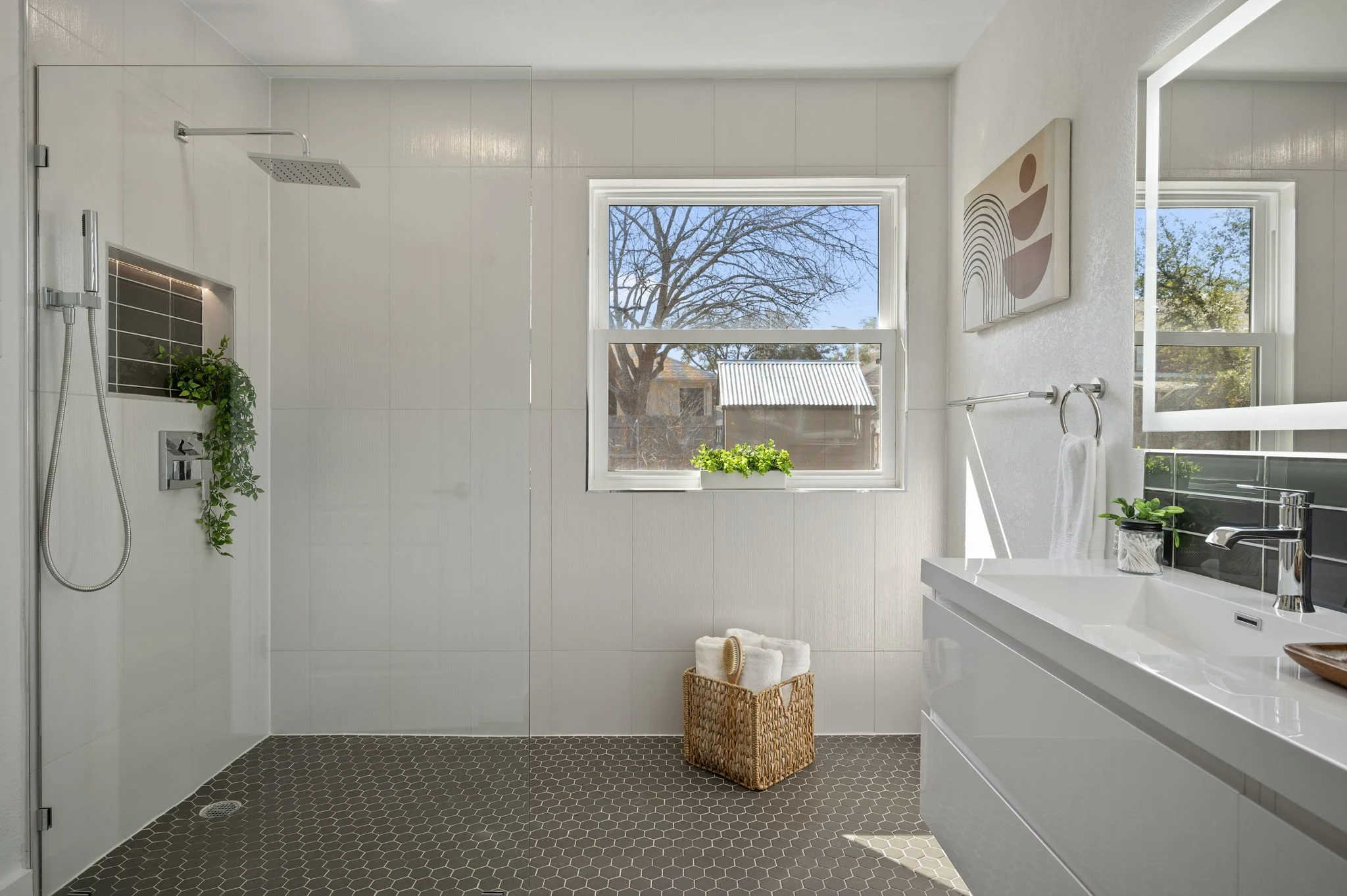
Bathroom Renovation in Austin: Process, Real Costs, and What to Expect
Planning a Full-Home Renovation?
The planning conversation is the most valuable one we have. Free consultation — no obligation. Let's talk through what you're envisioning and build a clear picture of what it would take.
Get a Free Consultation