
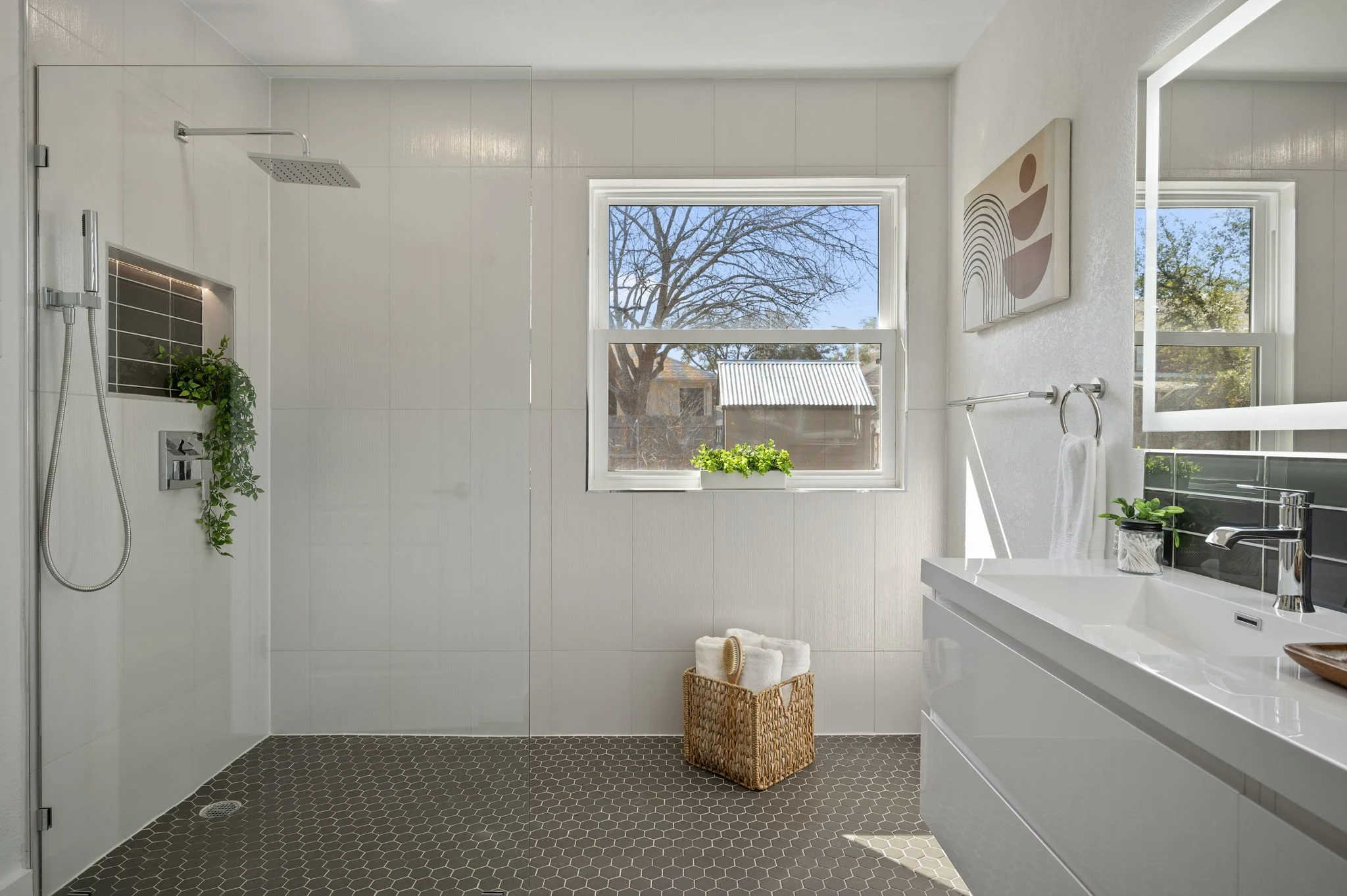
Your bathroom is the room you begin and end every day in. If you're planning to renovate the kitchen at the same time, our kitchen renovation guide walks through a parallel process — and batching both projects saves significantly on trade mobilization costs. It's the smallest space in the home and, per square foot, the most expensive to renovate — because it packs more trades, more materials, and more decision points into a confined area than any other room. Done right, a bathroom renovation delivers one of the highest returns of any home improvement. Done poorly, it creates problems that hide behind tile for years.
This guide walks through the full process — consultation through final walkthrough — and gives you the honest cost and timeline picture that most contractors won't share until you're already signed.
"40–60% of bathroom renovations uncover something unexpected behind the walls. A good contractor budgets for it. A cheap contractor doesn't."
Defining the Scope
The word "renovation" covers an enormous range of work. Before any conversation about cost or timeline, it's worth being precise about what you're actually doing.
Cosmetic Refresh
New fixtures, updated lighting, resurfaced or replaced vanity top, fresh paint, new mirror. No tile demo, no plumbing moves, no structural changes. This is the fastest path to a noticeably improved bathroom — ideal for guest baths, investment properties, or any space that functions fine but looks dated.
Mid-Range Renovation
Full demo and replacement of tile, vanity, toilet, tub or shower, and lighting. Minor plumbing adjustments (not relocation). New exhaust ventilation, new flooring, updated storage. This is the scope most primary and secondary bathrooms genuinely require — everything new, nothing moved.
Full Gut / High-End Renovation
Everything to the studs. Layout changes, plumbing relocation, possible footprint expansion, custom cabinetry, luxury tile work, frameless glass enclosures, freestanding tub, heated floors, and layered lighting. This is for primary bathrooms where you want a genuine spa experience, or for homeowners preparing to sell at the top of their price bracket.
The Process, Step by Step
1. Consultation
We spend 60–90 minutes in the space. We assess the existing plumbing layout, electrical panel capacity, ventilation, moisture conditions, and structural framing. We ask how the bathroom is used, what frustrates you about it, and what your vision looks like. Everything that follows is built on this conversation.
2. Design & Material Selection
We develop a complete design before anything is ordered or touched: floor plans, tile selections, fixture specifications, vanity style, lighting layout. Every decision is made at the table — not mid-project. Changes made after construction begins are the single biggest driver of cost overruns in any renovation. We close that door before we open a wall.
3. Permits
Any work involving plumbing, electrical, or structural changes requires a City of Austin permit. We handle all of it. Standard residential permits are typically issued within 7–10 business days. No homeowner should be pulling their own permits — it creates liability and creates problems at resale.
4. Demo
Demo typically takes one to three days. This is also when the space tells its history: cast iron drains, galvanized supply pipes, inadequate waterproofing, subfloor damage. A seasoned contractor has already built a contingency for these discoveries. A low-bid contractor has not — and this is where their quotes balloon mid-project.
5. Waterproofing & Rough-In
Before a single tile goes up, every wet surface receives a proper waterproofing membrane. This step is the most critical and most often skipped in cut-rate renovations. In Austin's humidity, improper waterproofing doesn't fail dramatically — it fails slowly, invisibly, behind tile, until the damage is catastrophic. We use Schluter Kerdi or equivalent systems. It adds cost and it protects your investment.
6. Build, Finish & Walkthrough
Tile, cabinetry, plumbing trim-out, electrical fixtures, hardware — each in sequence. Then a final walkthrough where we review every grout line, every caulk joint, every fixture function. You sign off when you're satisfied.
Timelines
| Scope | Timeline |
|---|---|
| Cosmetic Refresh | 3 – 5 days |
| Mid-Range Renovation | 1 – 2 weeks |
| Full Gut / Primary Bath | 2 – 3 weeks |
What Does a Bathroom Renovation Cost in Austin?
| Scope | Typical Cost Range |
|---|---|
| Cosmetic Refresh | $4,000 – $7,500 |
| Mid-Range Full Bathroom | $10,000 – $20,000 |
| Full Gut / Primary Suite | $22,500 – $42,500+ |
Material selections drive these numbers significantly. Stock cabinetry, ceramic tile, and standard fixtures stay toward the lower end. Custom cabinetry, large-format porcelain, natural stone, and premium fixtures push toward the top. Budget a 10–15% contingency on every project — discoveries behind walls are the rule, not the exception.
What's Worth the Money
Not all upgrades return equally. Here's what consistently delivers the best value in Austin's market:
- Walk-in shower conversion — replacing a seldom-used tub with a well-designed walk-in shower is the single highest-returning individual upgrade in most bathrooms
- Double vanity with stone countertop — one of the most requested features and consistently rewarded by buyers
- Upgraded tile work — execution quality on grout lines and layout patterns signals craftsmanship to buyers faster than almost anything else
- Layered lighting — ambient ceiling light, vanity-side task lighting, and accent lighting in niches. Buyers notice flat, single-source lighting immediately
- Proper ventilation — a 110 CFM humidity-sensing exhaust fan costs $200–$400 and protects a $20,000 renovation from mold damage. Non-negotiable in Austin's climate
Austin-Specific: What You Need to Know
Hard Water
Austin's water runs approximately 184 PPM — hard to very hard. This is not a minor nuisance for a new bathroom. Mineral scale deposits on frameless glass, fixtures, and showerheads within weeks if untreated. If you're investing in a quality renovation, the conversation about a whole-home water softener should happen before the project starts, not after the glass is already spotted. The incremental cost ($1,500–$4,000) protects your investment for years.
Humidity and Ventilation
Austin bathrooms without proper ventilation develop grout mold and ceiling damage within one season. Standard builder-grade exhaust fans — common in Austin's spec construction — are inadequate. Every renovation we do includes properly sized ventilation ducted to the exterior, not the attic. It is a code requirement in most cases and a practical necessity in all cases.
Older Homes
Central Austin's desirable neighborhoods are full of homes built in the 1940s–1970s. These properties frequently have cast iron drain lines, galvanized supply pipes, and subfloor structures not rated for heavy stone tile. We assess all of this at consultation, not at demo. Surprises are managed best when they're expected.
Related Articles

Kitchen Renovation in Austin: What to Expect, What It Costs, and How to Get It Right
Full-Home Renovation in Austin: How to Plan It, What It Costs, and How to Survive It
Ready to Transform Your Bathroom?
Free consultation, no obligation. We'll assess the space, walk through your vision, and give you an honest picture of scope, cost, and timeline.
Get a Free Consultation